
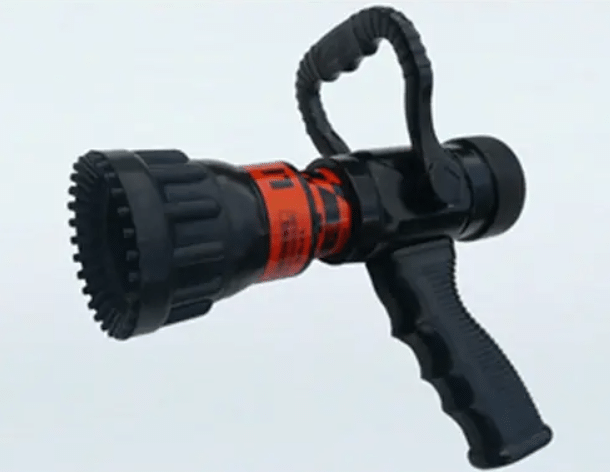
Picture two callouts on the same night. One is a smoldering stack of cartons in a Dammam warehouse; the other is a leaking fuel line at a loading bay. The fire hose nozzle Saudi Arabia crews reach for on the first call could make the second call far worse. Matching the device to the hazard is the skill that separates a controlled incident from a costly one. Here is our methodical approach to it.
What Does A Nozzle Actually Control?
Every discharge device makes three decisions for the crew: how much water leaves, how far it travels, and what shape it takes.
Flow is the volume of water per minute. A low setting can leave a growing blaze untouched, while a high setting can overwhelm a small team that must brace against the push.
Pressure and reach go together. Weak input pressure results in a dribble that misses the target, whereas strong inlet pressure creates a tight, far-reaching jet and a well-formed spray.
Shape is the part crews feel most directly. A solid column punches into burning material, and a wide spray soaks up heat and screens the person holding the line.
Reaction force deserves mention as well. The harder the water leaves, the harder the device pushes back on the hands holding it, so the right choice also protects your people from fatigue.
Main Nozzle Types and What Each Does Best
Learning the main fire hose nozzle types is easier when you treat them as tools, each with one job; each does better than the rest.
Straight Stream or Smooth Bore
This is the plain, solid jet. It carries water the farthest, penetrates deeply into piled material, and loses little energy to friction along the way.
Because the internals are simple, it keeps working when the water is gritty or the site is dusty. What it cannot do is shield the crew from heat or absorb heat quickly over a wide area.
Fog or Spray Patterns
Fog turns the stream into a cloud of droplets with a huge combined surface area. That surface soaks up heat quickly, which is why spray works so well in rooms, corridors, and ship compartments.
Outdoors, a stiff desert wind can scatter the cloud before it reaches the target. Used carelessly in a closed room, it can also push scalding steam back toward the crew.
Adjustable or Selectable Flow
An adjustable model lets the operator dial the flow and pattern without leaving the line. A reliable firefighting nozzle of this type suits crews who face changing supply conditions or must shift from defense to attack in seconds.
The price of that flexibility is more internal parts. Grit in the selector ring is the classic failure, so these units need regular rinsing and a test spray.
Foam-Compatible
These units mix air into a foam solution and lay down a smothering blanket. They are the answer when the fuel is a liquid because the blanket seals the surface and holds back vapor.
The gadget, the foam concentrate, and the proportioner must all work together for the chain to be successful. A weak link anywhere produces a thin, quickly collapsing layer.
Monitor Nozzles
A monitor is the heavy hitter. It sits on a fixed post, a vehicle, or a portable stand and delivers far more water than any handheld line could manage.
Crews like monitors because they operate from a distance. They need solid anchoring and a supply that can truly feed them, or the big-volume promise never materializes.
Matching Nozzle Type to Fire Risk
Ordinary Combustibles in Warehouses, Offices, and Residential Blocks
Paper, timber, fabric, and plastic packaging retain heat deep within the pile. The goal is cooling, and an adjustable unit lets the crew open with spray inside the building and tighten the pattern to remove hidden embers.
A hard, straight jet will destroy stock and flood the floor. A fine fog that never reaches the core leaves a fire that sulks quietly and returns after the crew leaves.
Flammable Liquid Hazards Such As Fuel Storage and Petrochemical Sites
A burning liquid does not stay put, and water thrown at the wrong angle can carry it into new areas. The fire hose nozzle Saudi Arabian teams use for a fuel depot must be able to handle foam to seal the surface.
Monitors cover vast bunded regions from a safe position, and spray continues to play a part in cooling nearby tanks and protecting rescuers. A direct solid stream on an open spill is the move to avoid.
Marine, Port, and Vessel Environments
Metal and seals are constantly attacked by salt, dampness, and spray. Bodies and internals built to resist corrosion last much longer on a berth than ordinary hardware.
Open decks and quay edges favor monitors and straight reach, while engine spaces and tight compartments favor spray. A fresh-water rinse after every use keeps selector rings from freezing up with dried salt.
Electrical and Plant Room Risks
Water conducts electricity, and no pattern-setting changes that. The first step is always to isolate power, followed by whatever your site rules and the local authority require.
Some procedures allow fine spray from a set distance once the hazard is controlled, and many plant rooms rely on fixed gas or dry chemical protection instead. Your safety officer’s written procedure takes precedence over any general advice, ours included.
High-Heat Outdoor Industrial Sites
Radiant heat from a large blaze pushes crews back, making distance the primary concern. A straight jet or a monitor lets the team strike the target without walking into the heat.
Summer temperatures also age rubber seals and gaskets quickly. A firefighting nozzle stored in a baking cabinet should receive a seal inspection long before the next drill, not after it fails.
Why Couplings Matter As Much As the Nozzle?
A brilliant discharge device is useless if it will not connect. Each fire hose coupling determines how quickly crews can couple up, how much water leaks at the joint, and whether new gear fits the old stock.
At Blue Anchor Marine, we regularly encounter sites where one station uses instant fittings, another uses threaded fittings, and a third prefers Storz. Adapters bridge the gap, but each one adds a potential leak and a few lost seconds.
Dust grinds into threads, and salt eats rubber seals. Clean the seating faces, replace worn gaskets, and keep spares within arm’s reach of the crews who need them.
Common Mistakes When Selecting Nozzles for Saudi Sites
Many purchasing errors stem from the assumption that all fire hose nozzle types behave alike. These are the slips we run into most:
- Choosing on price alone, without checking flow and pressure against the pump and hose size
- Putting a straight-stream-only unit on a flammable liquid risk
- Overlooking whether the device works with the foam concentrate already in stock
- Letting different stations or trucks run different coupling standards
- Ignoring corrosion resistance at coastal and marine locations
- Never flushing or cycling selector rings between emergencies
None of these looks serious on a purchase order. During a real incident, any one of them can waste minutes a crew cannot spare.
Practical Questions to Ask Before Buying
Before you ask suppliers to quote on a fire hose nozzle for Saudi Arabia projects, verify that they can pass inspection. Gather your safety team and answer these questions together:
- What flow and pressure do your pumps and supply lines deliver in practice?
- Which hazard sits in the area: ordinary combustibles, flammable liquids, live electrical gear, or a mix?
- What hose diameter and length are in service today?
- Which coupling standard do your stations already use?
- How much dust, salt, and heat will the equipment meet every year?
- Who will rinse, test, and service it, and on what schedule?
- Which local civil defense requirements and recognized standards, such as NFPA or EN, apply?
Record your current fire hose coupling standard before placing the order, because that single detail narrows the field more quickly than anything else on the list.
Our team at Blue Anchor Marine is happy to walk you through these answers before you commit to a purchase.
Choosing With Confidence
Match the pattern to the hazard, set the coupling standard first, and protect every moving part from sand and salt. Follow that order, and the fire hose nozzle Saudi Arabia crews carry will do its job when the alarm sounds.
Blue Anchor Marine supplies couplings and nozzles for these needs. Visit to see the range and request guidance for your site.
Frequently Asked Questions
1. Which fire hose nozzle is best for industrial facilities in Saudi Arabia?
The best nozzle depends on the site’s fire risks, water supply, and operating conditions. Adjustable-flow nozzles may suit varied combustible-material hazards, while foam-compatible equipment may be required for flammable-liquid fires. Always follow the site’s approved firefighting procedures.
2. How do I choose the correct fire hose nozzle flow rate?
Check the available pump pressure, hose diameter, required discharge rate, and nozzle specifications. The selected nozzle must operate within the system’s rated limits while providing sufficient flow for the identified fire hazard.
3. Are corrosion-resistant fire hose nozzles important for marine environments?
Yes. Coastal and marine locations expose firefighting equipment to salt, moisture, and corrosive conditions. Corrosion-resistant materials, compatible seals, routine freshwater rinsing, and regular inspections can help extend equipment life.
4. What should I check before purchasing a fire hose nozzle in Saudi Arabia?
Verify the required flow and pressure ratings, coupling compatibility, material durability, maintenance requirements, product documentation, and applicable Saudi Civil Defense requirements. Confirm that the nozzle meets the standards specified for your facility.
5. How often should fire hose nozzles be inspected and maintained?
Inspection and maintenance frequency should follow the manufacturer’s instructions, applicable standards, and your site’s fire protection procedures. Check for leaks, damaged seals, blocked outlets, corrosion, and faulty pattern selectors, and carry out functional testing at the prescribed intervals.
