
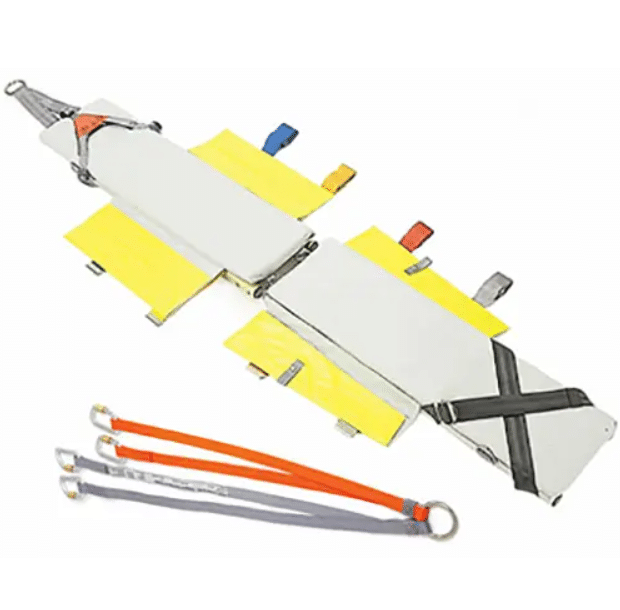
When someone is injured inside a tank or a hold, the plan a team rehearsed meets the reality of a narrow opening and very little room. A Paraguard stretcher in Saudi Arabia gives crews a practical way to extract an injured person without improvising on the spot. We want to walk through why that matters, how this equipment works, and what buyers should check before ordering.
This article is written for the people who carry that responsibility: safety officers, vessel and plant operators, site managers, and the procurement teams who buy the gear. We keep it practical because nobody needs a sales pitch when a colleague is in trouble below deck.
Why Are Tight-Access Work Areas So Unforgiving?
Tanks, cargo holds, pump rooms, shafts, and voids share a few awkward traits. The openings are small, the lighting is poor, and the air can be hot, stale, or hazardous. Anyone who goes in to help faces the same conditions that caused the problem.
A confined-space emergency also leaves very little time to think. A flat board or a hastily tied sling rarely fits through a manway, and dragging or twisting a casualty can cause further injury. Teams often find that gear that works on an open deck does not suit the geometry of a tank.
Rescuers also take on risk. Every extra minute inside puts more pressure on the entry team and the standby crew above. That is why the choice of casualty carrier belongs in planning, long before anything goes wrong.
What Does a Purpose-Built Casualty Carrier Do Differently?
A carrier designed for extraction work starts with a simple idea. The person must be held securely while the carrier itself remains slim enough to pass through awkward gaps. Most other design choices follow from that.
Support for the Casualty
A good design supports the body along its length and limits movement while the carrier is turned, tilted, or lifted. That matters because many tight-access work areas call for a vertical lift, followed by a change to horizontal once the casualty reaches open ground. The carrier has to cope with both without asking the team to shift the person by hand.
Handling Points for the Team
Rescuers working in tight spaces often have only one free hand at best. Handling points that are easy to find and grip, even with gloves, save seconds and reduce fumbling. Lifting points that suit rope work matter just as much as the grips.
Many marine crews know the Neil Robertson Stretcher, a wrap-around design long associated with ships and industrial plants. It remains a useful reference when buyers compare options because it shows what a carrier for narrow openings should achieve: a snug hold, a slim profile, and dependable lifting.
When we talk with buyers about a confined-space rescue stretcher, we first ask about the openings their crews actually face. A carrier that suits a wide hatch may be a poor match for a small manway, and vice versa. Measuring the actual access points on site tells a team more than any catalog description.
Where Does the Need Show Up Across Saudi Arabia?
Saudi Arabia’s ports, shipyards, refineries, and tank farms all contain spaces where crews must enter, work, and exit through limited openings. A Paraguard stretcher in Saudi Arabia belongs in that picture as part of the standing emergency kit, kept close to the work areas where it may be needed rather than stored far away.
Vessels calling at Saudi ports add another layer, because crews, agents, and shore teams have to coordinate quickly when something goes wrong in a hold or a ballast space. At Blue Anchor Marine, we supply marine and industrial safety equipment to this market, so we hear how much time teams lose when the right carrier is not nearby.
Heat is a factor too. Crews in Saudi Arabia work in high temperatures, and a long delay inside a warm, enclosed area makes everything harder. Equipment that is quick to bring forward and simple to handle helps keep the operation calm.
How Does A Carrier Fit Into the Wider Rescue Setup?
A casualty carrier is one part of a system. It works alongside harnesses, ropes, lifting gear, communication links, and a trained standby team. If any element is weak, the whole extraction slows down.
Communication deserves its own mention. The entry team, the standby person, and the lifting crew all need a clear way to signal each other and a plan for what happens when the usual method fails. A carrier does its job only when the people around it can act together.
Practice matters as much as hardware. Teams that drill with the actual carrier learn how it packs, how it handles at an angle, and how it behaves when passed through a manway. We encourage crews to rehearse with the equipment they will actually use and to repeat drills whenever staff changes.
Buyers comparing models can browse our full range of casualty carriers to see which designs suit the spaces on their sites.
What to Look for When Choosing?
Procurement teams often ask us what makes a Paraguard stretcher in Saudi Arabia the right fit for a particular site. The answer starts with the work area, not the product sheet. These checks help narrow the field:
- Fit for the smallest opening a crew may have to use
- Secure support for the casualty during vertical and horizontal movement
- Handling and lifting points that work with gloves and rope systems
- Construction that copes with marine air, heat, and regular handling
- Storage that keeps the carrier ready and protected between uses
- Clear information from the supplier on the exact model’s features and intended use
We recommend requesting the specifications for the exact model rather than relying on general descriptions. Features and dimensions vary between products, and the supplier should be able to confirm them in writing.
Teams that already have a Neil Robertson Stretcher sometimes ask whether a second carrier is worth having. In many cases, the answer depends on the openings involved and the number of sites, since holding more than one type lets a crew choose the one that fits the job.
Support after the purchase counts as well. Blue Anchor Marine is glad to talk buyers through practical questions at this stage, such as where to keep the carrier and how it should sit alongside existing rope and harness gear.
Keeping the Carrier Ready Between Emergencies
Equipment that sits unused for months can fall out of sight and out of mind. A regular check by the safety team keeps it clean, dry, and complete, with straps, grips, and fittings in good condition. Any sign of wear should prompt a decision by a competent person before the carrier goes back on the shelf.
Treat the confined-space rescue stretcher as part of the permit and emergency plan for each space, so the crew knows where it is before anyone goes in. A carrier that has to be searched for loses the time it was bought to save.
A confined-space emergency rarely offers a second chance to find a missing part. A short checklist, a labeled storage point, and a named person responsible for the equipment remove most of that risk. These habits cost very little compared with what a delay can cost a crew.
Final Perspective
A Paraguard stretcher in Saudi Arabia earns its place by solving a specific problem: getting an injured person out of a space that was never designed for rescue. Choosing well means matching the design to the openings, planning drills around it, and keeping it ready.
Blue Anchor Marine supplies safety equipment for Saudi marine and industrial sites. Reach out with questions about the spaces where crews work, and we will help point you toward a suitable option.
Frequently Asked Questions
1. What is a Paraguard stretcher used for in confined-space emergencies?
A Paraguard stretcher is used to help secure and extract an injured person from restricted areas such as tanks, cargo holds, pump rooms, and other spaces with narrow access points.
2. How do you choose a Paraguard stretcher in Saudi Arabia?
Consider the smallest access opening at your site, the casualty support required, the lifting method, compatibility with existing rescue equipment, and the manufacturer’s specifications for the exact model.
3. Can a Paraguard stretcher be used for vertical and horizontal rescue?
The suitability depends on the specific stretcher model and its approved use. Check the manufacturer’s instructions and confirm that the equipment is appropriate for the planned lifting and transfer methods.
4. What other equipment is needed for a confined-space rescue?
A confined-space rescue setup may include suitable harnesses, ropes, lifting equipment, communication systems, and a trained standby team. The exact requirements depend on the site, hazards, and rescue plan.
5. How should a Paraguard stretcher be maintained?
Inspect the stretcher regularly according to the manufacturer’s instructions. Check straps, handles, lifting points, and fittings for wear or damage, and store the equipment in a clean, dry, accessible location so it is ready for emergencies.
