
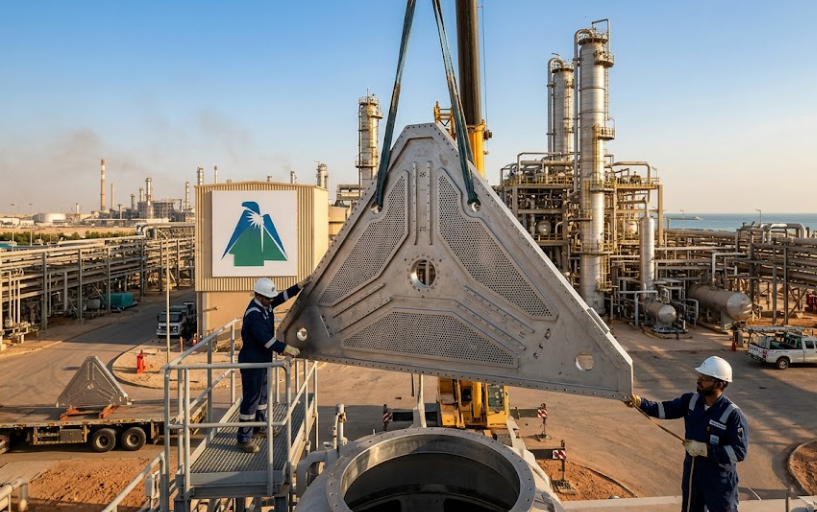
A vessel under tow is only as secure as the point where the line meets the hull. That is why a well-chosen delta plate in Saudi Arabia matters to anyone who moves ships along the Kingdom’s coastlines.
This guidance was written with ship operators, procurement teams, tug and salvage crews, and maritime superintendents in mind. It describes the purpose of the fitting, the importance of fit and quality, and what questions to ask before making a purchase.
What Is This Fitting and What Does It Do?
The fitting’s name stems from the fact that it is a sturdy, flat piece of metal with a triangular shape. It has openings at its corners so shackles and other connecting hardware can be attached.
Its main job is simple. Because the pull from a tug or towing vessel merges several lines into a single connection point, it comes via a single, well-defined route.
In a towing bridle, the legs run from the vessel’s strong points and meet at this fitting. The legs share the load, and the fitting holds the whole arrangement together.
Why Does the Triangular Shape Help?
The shape is not decorative. By spreading the pull over the legs and giving each connection a clean place to sit, it keeps the arrangement tidy and easy to inspect.
A tidy layout also helps crews spot wear, since each shackle and leg has its own position.
Consider it the gathering place of all the forces involved in the arrangement. The legs pull in from one side, the main line pulls out from the other, and the fitting sits in the middle, taking both.
Why Are Fit and Quality Important When Towing a Vessel?
A tow is rarely a steady, calm pull. Sea state, vessel motion, and changes in heading all alter how force reaches the connection point.
This is why we treat a delta plate in Saudi Arabia as a safety-critical purchase, not a routine one. Every other component of the arrangement is stressed by a shoddy or incomplete fitting.
When we talk about quality, we mean a few practical things:
- Material suited to marine conditions, including constant exposure to salt water and spray
- Clean, even finishing with no rough edges around the openings
- Openings that match the shackles and hardware used in the arrangement
- Manufacturer-provided clear documentation that you can compare to what you get
- Consistent workmanship from one unit to the next
Fit with the Rest of the Arrangement
Good quality alone is not enough. The fitting also has to suit the legs, shackles, and lines it will connect to, because a poor match can cause rubbing, uneven loading, or extra wear.
Smooth ship towing operations depend on every component working as part of one system. The connection point is where that system either holds together neatly or reveals its weakest link.
Inspection, Records, and Good Habits
Even if a fitting is delivered in good condition, it nevertheless requires maintenance over the course of its useful life. Your safety procedures and the manufacturer’s guidance should set the rules for inspection and for when to retire gear.
We suggest that teams keep clear records for each fitting, including where it came from and when it entered service. Good records make audits calmer and replacement decisions easier.
Visible signs such as deep corrosion, cracks, or bent openings warrant a careful look by a competent person. A fitting should be removed from service when in doubt.
Who Relies on This Fitting?
The same piece of equipment is viewed differently by different teams:
- Ship operators seek reliable equipment that facilitates scheduled movements and supports the safety of their boats.
- Marine superintendents look for equipment that is easy to inspect, record, and maintain.
- Tug and salvage crews need a connection point they can trust when conditions change quickly.
- Procurement teams need clear information, a consistent supply, and a supplier who answers questions.
Conditions That Shape the Choice in Saudi Arabia
Equipment along the Kingdom’s coasts operates in strong sun, warm air, and salt-laden spray. These conditions are part of daily life at sea and are hard on metal fittings over time.
When buyers ask us about a delta plate in Saudi Arabia, the conversation usually turns to durability. They want to know how the fitting will withstand heat, salt, and repeated use over many seasons.
That is a fair question, and the honest answer starts with the build. Material, finish, and care in manufacturing matter more than a low price on the day of purchase.
Common Buying Mistakes
A few recurrent actions are the root cause of most shopping problems. They are easy to avoid once you are aware of them:
- Choosing on price alone and overlooking build quality
- Ignoring how the fitting will match existing shackles and lines
- Skipping the documentation check
- Postponing the purchase until a scheduled movement is near
- Presuming that two fits with comparable shapes will exhibit the same behavior
None of these mistakes is hard to avoid. A little planning and a good conversation with your supplier go a long way.
What to Look for Before You Buy?
At Blue Anchor Marine, we supply marine equipment to buyers across Saudi Arabia and encourage every customer to ask detailed questions before ordering. A good supplier welcomes those questions.
Use this short checklist when you compare options:
- Do you have access to readable and verifiable documentation from the manufacturer?
- Is the finish consistent, with no sharp edges or visible flaws?
- Do the openings match the way you have arranged the lines and shackles?
- Is the product described clearly, without vague or inflated claims?
- Can the supplier answer technical questions in plain language?
When you source Marine Access Equipment, the supplier’s expertise counts as much as the product itself. A person who knows how the equipment is utilized will be able to identify incompatibilities before they become issues.
Questions to Raise with Your Supplier
Start with your own towing bridle. To find out if a particular fitting is compatible, let the provider know which legs and connection hardware you currently use.
Inquire about the use of the supplier’s goods in ship towing operations, and pay attention to any evident, specific answers rather than general sales language.
Also ask about lead times, documentation, and after-sales support. Reliable supply matters when a planned movement depends on a single fitting arriving on time.
Choosing With Confidence
Reliable Marine Access Equipment supports the people who work at sea, from the tug crew on deck to the buyer placing the order. The right fit is a small item with a big job.
Whether you are restocking spares or buying for a new project, choose a delta plate in Saudi Arabia with the same care you would give any safety-critical item. Review the build, the paperwork, and the supplier behind it.
Our team is happy to talk through your requirements before you commit, and a short conversation can prevent costly mismatches. You can read more on our product page, and the team at Blue Anchor Marine is ready to help you choose with confidence.
Frequently Asked Questions
1. What is a delta plate used for in ship towing operations?
A delta plate connects the legs of a towing bridle to a main towing line, providing a central connection point for the towing arrangement.
2. How do I choose a delta plate in Saudi Arabia?
Consider the towing arrangement, required load capacity, material, connection dimensions, and compatibility with the shackles and lines in use. Always verify the manufacturer’s specifications before purchasing.
3. Why is material quality important for marine delta plates?
Marine fittings are exposed to salt water, spray, heat, and repeated loading. Suitable materials and manufacturing quality help support durability in these demanding conditions.
4. How should a delta plate be inspected before use?
Check for cracks, significant corrosion, deformation, damaged openings, and other visible defects. Follow the manufacturer’s inspection guidance, and have a competent person assess any concerns before the fitting is used.
5. Where can I source a delta plate in Saudi Arabia?
You can contact Blue Anchor Marine to discuss your marine equipment requirements, confirm product specifications, and ask about availability for your application.
