
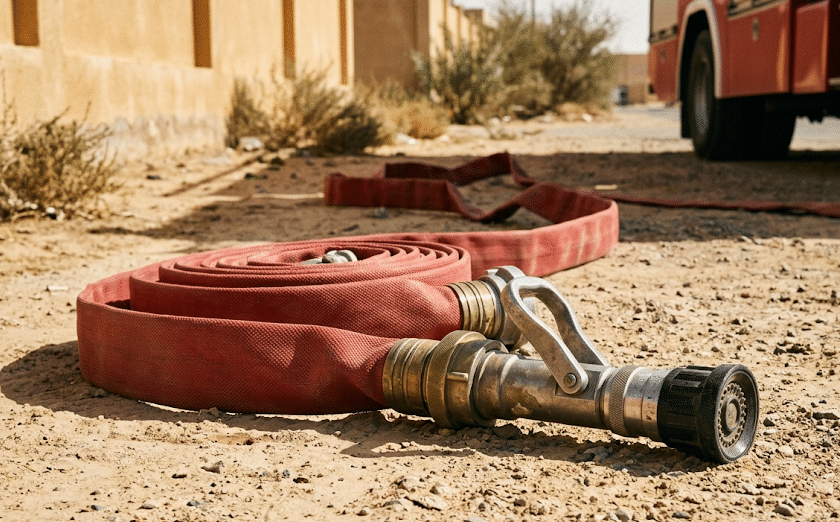
Equipment that sits unused for months can still let a crew down the moment it is needed. For any fire hose in Saudi Arabia, whether operators keep it on board or on site, the real test is whether it works the first time it is needed. A line that looks fine on its rack may hide a worn section, a stiff fold, or a damaged end. We wrote this guide to help you spot those problems early.
At Blue Anchor Marine, we supply marine safety equipment to vessels and facilities across the Kingdom, so we hear the same questions again and again. How often should equipment be checked? Where should it be stored? Who is responsible for it? Below, we answer them in plain language.
Why Readiness Starts Before the Alarm?
Readiness is a habit, not an event. People who take routine checks seriously build a strong emergency fire response in quiet moments, weeks before anything goes wrong. When an alarm sounds, nobody has time to untangle a stiff line or hunt for missing gear.
Marine and industrial settings in the Gulf region place steady pressure on fire safety equipment. Heat, humidity, dust, and salt air all wear on materials over time. We do not need exact figures to know that a routine look at each unit is the simplest way to catch wear before it fails.
What a Visual Check Should Cover?
A good check does not call for special tools. It calls for time, good light, and a habit of looking closely. We suggest a short, repeatable routine that any trained crew member can carry out.
The Line Itself
Start with the full length of the line, running your eyes and hands along it slowly. Look for the following:
- Cuts, scuffs, abrasion marks, and flattened or cracked areas
- Stiff or kinked sections that no longer lie or fold evenly
- Stains, residue, or damp patches that suggest the line was stored wet or left exposed to chemicals
- Mould or a musty smell, which usually points to poor drying or storage
- Damage near the ends, where the line meets the metalwork and strain is highest
Any unit that raises doubt should be tagged and set aside for review by a qualified person. We never recommend guessing. A questionable line left in service puts at risk the very crew who rely on it.
Fittings and Connections
Every fire hose coupling deserves the same attention as the line it joins. Look for dents, burrs, cracks, and corrosion on the metal. Check that moving parts turn freely and that seals and gaskets are clean, soft, and intact.
Compatibility matters too. Mixed connection types on the same vessel or site can slow a crew down at the worst possible moment. Keeping connections consistent across your equipment pays off when time is short.
Storage That Protects Equipment Between Uses
Storage is where many problems begin. A line left in a damp locker, folded in the same place for years, or pressed against sharp edges will age faster than one stored with care. These habits make a clear difference:
- Clean each line and let it dry fully before it goes back on the rack or into the cabinet.
- Keep equipment away from direct sun, oil, solvents, heat sources, and sharp surfaces.
- Vary the fold or roll so the same crease does not form in the same spot every time.
- Mark each storage point clearly and keep the area free from clutter.
- Place the metal ends where they cannot be knocked, dropped, or crushed.
Access matters as much as condition. A well-kept line behind stacked cargo or a locked door is of little use. Every crew member should know where each unit is stored and be able to retrieve it quickly.
If you are reviewing what you currently have, you can browse our hose options for marine and facility use and compare them with your needs and storage arrangements.
Handling Habits That Protect the Line
Careless handling shortens the life of good equipment, including the fire hose, which Saudi Arabian crews rely on day to day. Dragging a line across rough decks or concrete scrapes the outer surface. Dropping the metal ends dents them. Sharp bends and kinks strain the material each time they occur.
We encourage crews to use every inspection or drill as an opportunity to practice gentle, deliberate handling. Fold or roll lines as the manufacturer intends. Never leave them where vehicles, trolleys, or foot traffic can crush them.
After use, rinse away salt, dirt, and residue, then let the line dry completely. Wipe down each fire hose coupling, check that it moves freely, and confirm that the seals are still in place before the unit returns to storage.
Crew Familiarity Matters as Much as Equipment
Even perfectly maintained gear depends on people. A crew member who has handled the equipment before will move faster and with more confidence than someone encountering it for the first time under pressure.
Regular drills build that confidence. Short, frequent sessions work well because they keep skills fresh without pulling people away from their duties for extended periods. Each person should know where equipment is stored, how to carry it, how to make connections, and whom to notify when something looks wrong.
A confident emergency fire response comes down to small details becoming second nature. Clear roles, familiar equipment, and open communication help a team act without hesitation.
Keeping Records and Clear Responsibility
Checks are only helpful when someone owns them. Assign a named person or role to each storage point and maintain a simple written log. Useful entries include:
- The date and the name of the person who carried out each check
- Condition notes for the line and its fittings
- Any unit tagged, repaired, or replaced, and the reason
- Follow-up actions, each with a clear owner
Treating your fire safety equipment as a managed asset with an owner and a history prevents small faults from going unnoticed. A log also helps during handovers because the next person can see each unit’s history at a glance.
Choosing a Supplier You Can Rely On
Preparation begins at the point of purchase. When we speak with buyers, we encourage them to ask clear questions about any equipment they are considering. What is it designed for? Which connection types does it use? What documentation comes with it? Can the supplier answer questions after delivery?
Buyers seeking fire hose in Saudi Arabia should expect clear product information, honest answers, and a team that understands local operating conditions. Vague replies are a warning sign worth taking seriously.
Blue Anchor Marine works with vessel operators, safety officers, and facility teams who want straight answers, and we are glad to talk through your requirements before any purchase decision.
A Practical Routine to Start This Week
Readiness does not require a large budget or a new program. It requires a routine that people actually follow. Here is a simple starting point:
- Walk every storage point and confirm each unit is present, reachable, and dry
- Inspect each line and its ends using the checks above
- Tag anything doubtful and report it to the responsible person
- Schedule a short drill so the crew can handle the equipment together
- Record the results in your log
Repeat the routine on a schedule that suits your vessel or site, and adjust it as your operation changes. A busy facility may need more frequent checks, while a vessel at sea for extended periods may need a firm weekly habit.
Whether you manage one vessel or several sites, dependable fire hose maintenance in Saudi Arabia starts with the small habits above.
If you want a second pair of eyes on your equipment or storage arrangements, send us your questions, and Blue Anchor Marine will walk you through them.
Frequently Asked Questions
1. How Often Should a Fire Hose Be Inspected in Saudi Arabia?
A fire hose should be inspected according to the manufacturer’s guidance, applicable safety standards, and the requirements of the vessel or facility. Routine visual checks can help identify wear, corrosion, damaged fittings, and storage issues before they affect readiness.
2. What Are the Common Signs of Fire Hose Damage?
Common signs include cuts, abrasions, cracks, flattened sections, stiff folds, mold, and damage near the couplings. Any fire hose showing signs of deterioration should be removed from service and assessed by a qualified person.
3. How Should a Fire Hose Be Stored After Use?
After use, clean the hose according to the manufacturer’s instructions and allow it to dry completely. Store it in a designated, accessible location away from direct sunlight, excessive heat, chemicals, sharp edges, and crushing hazards.
4. Why Is Fire Hose Coupling Compatibility Important?
Compatible couplings allow equipment to connect correctly and help avoid delays during an emergency. Marine and industrial facilities should verify that hose connections match the fittings used in their firefighting systems and maintain consistent connection types where appropriate.
5. What Should Be Included in a Fire Hose Inspection Log?
A fire hose inspection log should include the inspection date, the responsible person’s name, the hose’s condition, any issues found, and follow-up actions. Records of repairs, replacements, and testing can also help track equipment condition and support safe maintenance practices.
